End-of-Line Automation for Beverage Production
To offset rising labor costs and price-conscious consumers, beverage processors are turning to automated solutions. Implementing a comprehensive end-of-line automation system boosts throughput, ensures quality, and safeguards your profit margin. Start operating smarter and more efficiently with a customized system engineered to handle all your packaging and palletizing needs.
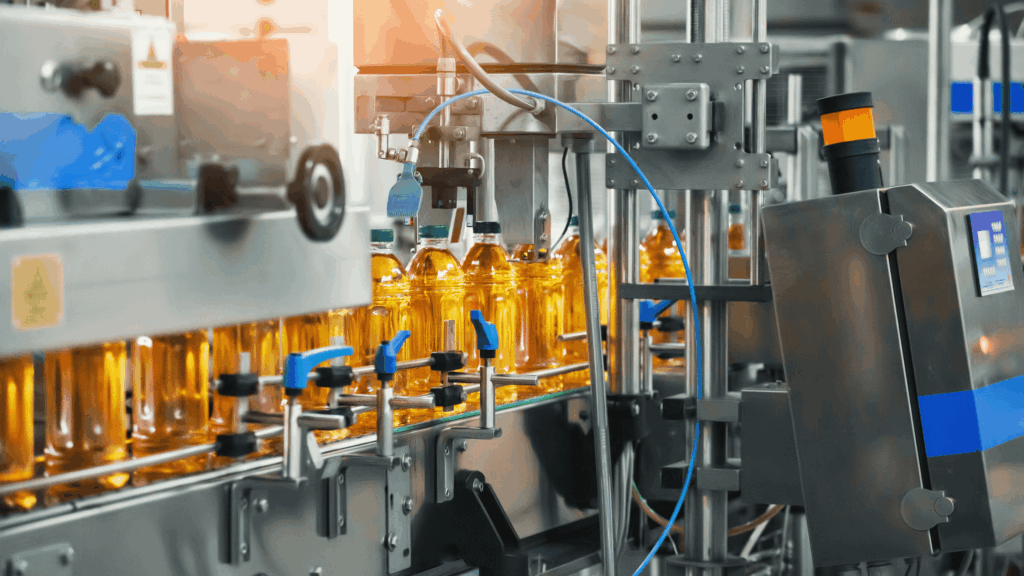
End-of-Line Automation for the Beverage Industry
End-of-line automation is the final process of taking your filled and capped bottles and cans and preparing them for distribution. Automation at this stage ensures precision, consistency and speed, which are all vital for maintaining product quality and meeting shipping deadlines.
Key End-of-Line Automation Functions for Beverage Processors
- Case/Tray Preparation: Forming boxes and trays to hold your product.
- Product Inspection: Ensuring every package is sealed, labeled, and filled correctly.
- Packing: Placing cans, bottles, or other containers into cases.
- Sealing and Labeling: Closing cases and applying final shipping labels.
- Palletizing: Stacking the final product on pallets and preparing for warehouse/shipping.
Why End-of-Line Automation is Crucial for Success
You need solutions that address the unique pressures of the modern beverage market, where changeover flexibility and cost control are paramount.
Beverage Industry Challenges and How Automation Solves Them
The SKU Challenge: Gain the ability to quickly change over between SKUs on the same line. For example, automation can help you move from 12-oz. cans to 750-ml bottles with minimal downtime.
Rising Labor Costs: End-of-line automation reduces reliance on costly and hard-to-find manual labor for repetitive tasks like case packing and palletizing. As a result, you dramatically lower operating costs.
Precision and Quality: You can achieve consistent, non-contact labeling, perfect case formation, and reliable pallet stacking that manual labor can’t match. Reliable automation prevents costly product damage.
Focus on Core Business: End-of-line automation frees up valuable human capital. Allowing employees to focus on value-added functions like brewing, mixing, or selling and removing them from dull, dirty, and dangerous tasks.
Who Uses Automated End-of-Line Systems?
Automated end-of-line systems are critical for virtually any producer that packages liquids for transport, regardless of size or product volume. Implementing automation allows beverage producers to maintain product consistency, increase speed, and enhance quality control during the final stages of packaging.
End-of-line automation is widely used across the entire spectrum of beverage production, including:
- Breweries (craft and traditional)
- Wineries and distilleries
- Soft drinks and juices
- Dairy and liquid food products
- Coffee and tea suppliers
When should beverage businesses consider automated end-of-line solutions?
Shifting toward packaging automation becomes critical when throughput reaches approximately 50 or more cans or bottles per minute. This helps beverage processors in this market segment overcome labor shortages and compete for market share.
Core Components of Your Automated End-of-Line System
At JHFOSTER, we engineer a comprehensive solution that delivers benefits by integrating best-in-class components. Here’s the breakdown of our solutions and the advantages they make possible.
Case Erectors/Tray Formers: Automatically constructing high-quality, perfectly square boxes provides precision packing.
Partition Inserters: Quickly and accurately dropping cardboard partitions into cases protects fragile glass bottles and prevents product damage and loss.
Case Packers/Sealers: Using robotics or custom mechanical systems to gently and quickly pack products and securely seal them for transport increases efficiency, consistency, and quality.
Machine Vision and Inspection Systems: Incorporating machine vision and inspection systems enables precision checks of fill levels, cap torque, and correct label placement before final packaging, ensuring only top-quality products leave the facility.
Automatic Labeling and Label Printing: Applying high-resolution labeling to cases with consistent placement and speed quickly prepares product for inventory and shipping, getting products to market faster.
Palletizing Robots: Using collaborative or industrial robots for fast, flexible, and repeatable stacking and arranging of finished cases onto pallets eliminates injuries to workers and reduces end-of-line bottlenecks.
Your Partner in Automation: Engineered to Deliver Results
JHFOSTER is your partner in automation. We provide expert guidance from start to finish. Our expertise lies in making sure complex automation components work seamlessly together as one cohesive system.
JHFOSTER offers:
- Seamless integration: We ensure all machines, from labelers to palletizing robots, work together seamlessly, eliminating bottlenecks and points of failure in the system.
- Tailored solutions for your application: We don’t sell an off-the-shelf system. We evaluate, design, integrate, and support a solution that is customized for your application.
- Comprehensive support: Get total system support, from the electrical controls to the robotic arms and end-of-arm tooling.
Ready to boost your efficiency and solve your end-of-line challenges? Request a quote today to discuss the right solution for your beverage business.