The Truth About Accuracy in Linear Actuators
When specifying a linear actuator, the first question most people ask is: “How accurate is it?” There is no simple answer and it’s possible that it’s not even the right question because accuracy may not be the most important parameter for a given application. While accuracy is often considered the most critical criteria, without a thorough understanding of what accuracy means when specifying a linear actuator, this approach may lead to selection of an actuator with unnecessarily high levels of accuracy, higher costs and more complexity. This blog explains the truth about accuracy in linear actuators.

What is a Linear Actuator?
Linear actuators create motion that moves a load in a straight line by converting energy into force. The energy can be pressurized air, fluid or electricity. Here’s a breakdown on some common types of linear actuators:
Pneumatic Linear Actuators
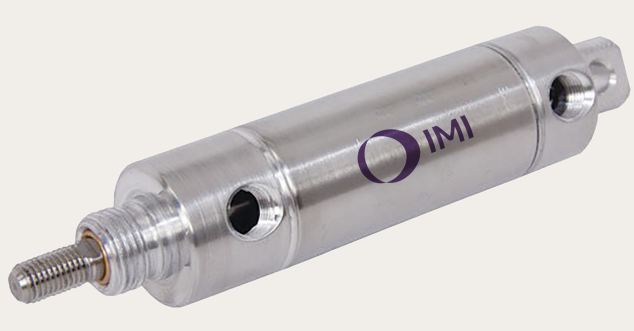
In pneumatic linear actuators, pressure from an external air compressor moves a piston inside a cylinder and, as pressure increases, the cylinder moves across the axis of the piston to create a linear force. Once it reaches its intended, or commanded, position, the piston returns to the starting point via a spring-back force or pressure supplied to the other side of the piston.
Hydraulic Linear Actuators
These operate like a pneumatic linear actuator, but liquid from a pump is used to move the piston rather than pressurized air.
Electric Linear Actuators
Electric linear actuators may convert the rotational motion of an electric motor into linear motion by rotating the actuator’s screw or belt causing the rod or carriage to move in a straight line. Linear motors are another type of electric technology – essentially a rotary electric motor that is unrolled to lie “flat,” allowing it to provide direct drive, straight-line (versus circular) motion.
What is Actuator Accuracy?
Actuator accuracy refers to the unit’s ability to hit its commanded position as closely as possible. While accuracy is often viewed as the most important selection parameter, prioritizing accuracy without understanding the application can lead to high costs and complexity.
How is Actuator Accuracy Measured?
Accuracy and repeatability are the key parameters of a linear actuator.
Accuracy: Accuracy refers to the actuator’s ability to hit, as close as possible, the commanded position. Accuracy is commonly specified in units of microns or thousandths of an inch.
Repeatability: Repeatability is the ability of the actuator to hit a given position each time. Repeatability is quoted as a plus/minus tolerance, meaning that according to the defining statistical standard, the true position of the actuator will fall within the specified range 99.8% of the time.
Accuracy and repeatability are closely related and are both desirable, but they are distinct concepts and, depending on the requirements of the application, one may be more important than the other.
A dartboard target is used to illustrate the difference between accuracy and repeatability. Using this visual, accuracy would be depicted as how often you can come close to hitting the bullseye. Repeatability would be your ability to hit the same location on the target each time.
The ability to hit the bullseye (or commanded position) repeatedly is referred to as precision. In other words, the overall precision of motion systems is a combination of the accuracy and repeatability provided by the linear actuator within the system. This is more likely what system designers and engineers really want to know when they ask about the accuracy of a linear actuator.
Several factors can impact the accuracy, repeatability and overall precision of a linear actuator, including:
Mechanical components: The rod, bearings, bushings, nut, screw, belt and pulley and their tolerances are highly dependent upon the manufactured quality. For example, if thread on the actuator’s screw is out of spec, it may impact the accuracy and/or repeatability of the unit.
Mounting: The tooling or components used to mount the actuator to the carriage can create a wobble effect that can influence accuracy and repeatability. Mounting orientation can also impact accuracy and repeatability.
Resolution: Resolution is a small increment of movement that can affect the overall precision of a linear actuator. Higher precision requires higher resolution and this is dependent upon the encoder that provides positional feedback.
How Accurate are Linear Actuators?
The accuracy of linear actuators depends upon the actuator type and the model selected. Different accuracy ranges are available to suit a variety of applications.
Generally speaking, electric linear actuators offer the highest accuracy, often into the micron range, while pneumatic and hydraulic linear actuators provide more moderate accuracy rates of around ±1 millimeter.
However, it’s important to remember that accuracy is not always the priority. Repeatability or overall precision may be more important than accuracy.
What is the Most Accurate Linear Actuator?
High-precision actuators that offer high levels of both accuracy and repeatability are available and usually used in critical applications where precision is non-negotiable such as medical device and printed circuit board (PCB) manufacturing.
How Important are Accuracy, Repeatability and Precision?
Rather than asking how accurate a linear actuator may be, a better question is: “What level of accuracy, repeatability and overall precision does my application require?”
To answer this question, it’s vital to have a good grasp on the application requirements.
As mentioned above, actuators with high levels of both accuracy and repeatability would be considered high-precision actuators and are used in critical applications like medical devices where high precision is mandatory. In more traditional applications, high levels of precision may not be needed and will drive up the cost and complexity of the system.
As a matter of fact, a linear actuator with lower levels of precision or accuracy but higher levels of repeatability may be a better choice in applications where it’s more important that the actuator hits the same position each time.
A material handling robot equipped with a gripper that sits atop a linear actuator is a good example of when repeatability may be more important. In this application, the actuator must move the robot into a variety of positions so the gripper can lift boxes and load them onto pallets, so it’s more important that the motion is repeatable and moderately accurate, rather than highly precise.
The best method of selection should not be based solely on the rated accuracy, but rather by gaining insight into what is required of the application. Not only will this prevent excess cost and complexity, but it will ensure that the linear actuator performs well in the application.
For assistance finding the best linear actuator for your application, contact an automation expert at JHFOSTER.
Let JHFOSTER Select a Linear Actuator for Your Application
Selecting a linear actuator is not just about accuracy. Repeatability, overall precision, operating environment or duty cycle may be more critical parameters for a given application. Unsure what type of linear actuator you need? Let JHFOSTER evaluate your project. Contact us today so our automation experts can help you select a linear actuator that provides optimal performance.