Rotary Vane vs. Rotary Screw Compressors
Optimize your continuous-duty application with a robust rotary compressor that delivers consistent performance and reliability. While both rotary vane and rotary screw compressors are solid technologies, rotary screw compressors stand out as the clear leader for high-volume air users that demand efficiency, dependability and performance. As your compressed air partner, the pros at JHFOSTER can provide the expertise to ensure you select the best air compressor for your application.
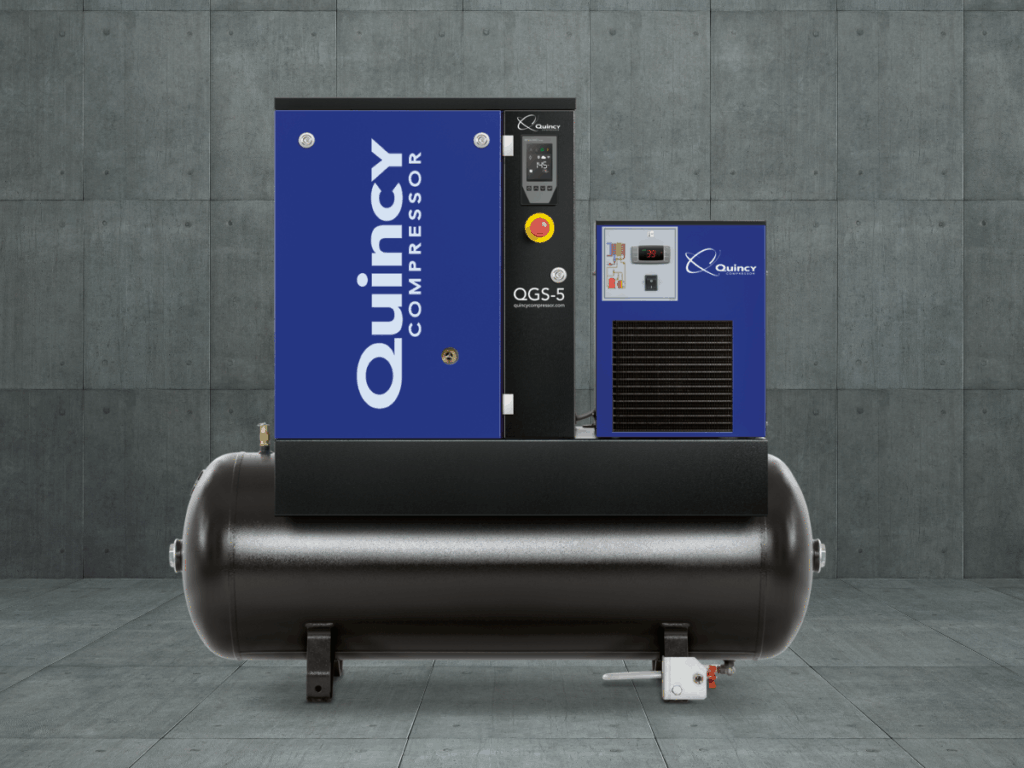
Rotary Vane vs. Rotary Screw: Working Principles and Key Features
While both technologies are rotary solutions, they operate via different mechanisms and working principles.
Rotary Vane Compressors
Mechanism: Rotary vane compressors use a slotted rotor mounted off-center in a cylindrical housing. Vanes slide in and out of the rotor slots, trapping and compressing air as they spin.
Key features: Simple design most are direct drive and have a compact footprint.
Rotary Screw Compressors
Mechanism: Rotary screw compressors use two helical, intermeshing rotors to continuously trap and compress air.
Key features: Scalable to achieve very high CFM and pressure requirements, making it an industrial workhorse.
Rotary Vane vs. Rotary Screw Compressors: Pros and Cons
Understanding the advantages and disadvantages of each technology will help guide your selection process.
Rotary Vane Compressor Pros
- A simple design and direct drive simplify maintenance requirements.
- The compact size makes rotary vane compressors ideal for niche applications, such as smaller machining operations and automotive shops that need a compressor with a high duty cycle rating.
- The operating principle ensures low-noise performance.
Rotary Vane Compressor Cons
- Oil-free rotary vane compressors may experience wear on the vanes and require periodic inspection and replacement. This is not an issue for oil-flooded units as they are lubricated.
- They may be less efficient than rotary screw compressors depending on the application requirements.
- Oil flooded rotary vane units may be susceptible to airend problems caused by condensation buildup in low duty cycle applications.
Rotary Screw Pros
- Rotary screw units offer best-in-class energy efficiency, especially at high volumes, providing long-term operational savings.
- High volumes and pressures can be scaled for large industrial systems.
Rotary Screw Cons
- Rotary screw compressors may lose efficiency in intermittent applications because they are designed for continuous operation.
- Small rotary screw compressors may be susceptible to airend problems caused by condensation buildup in low duty cycle applications.
Because rotary screw compressors provide high CFM and maximum efficiency with continuous use, they are the compressor of choice for high-volume, large-scale industrial applications.
Your Compressed Air Partner
At JHFOSTER, we provide the necessary expertise to evaluate your air demand and ensure you invest in the right technology. Contact us today to speak with a compressed air expert about upgrading to a more efficient compressed air system. Our experts can also perform a compressed air audit at your industrial facility to quantify your current air needs and determine the best compressor size for your operation.